
Context and Goal
Let’s start with the task.
We have a roadmap for AdiGuide — a mobile app with a tourist audioguide function. If you’re curious, you can check it out here:
In Q4, we plan to focus not on features, but on something else:
media presence and community.
We want to build a community of travelers around AdiGuide:
— user stories
— recommendations
— “places of power”
— monthly routes
Identity in a community starts with self-definition.
In digital products, its first form is usually the avatar.
But there’s a catch: not everyone wants to use their real photo.
And that’s perfectly normal — especially in a travel product where people don’t always want to “be visible.”
So we decided to:
create our own set of avatars inside the app.
You’ve seen similar things in messengers and social networks —
but we wanted to go a bit further.
Choosing what exactly these avatars should be turned out to be harder than expected.
We focused on three things:
— the images should be universal and relatable to many people;
— they should be simple and visually appealing;
— all avatars should feel like part of a single idea.
Avatar and Behavior
In the psychology of digital identity, there’s a concept called the Proteus effect. Simply put, people start behaving in line with how their avatar looks. This isn’t a metaphor — it’s an observed behavioral pattern: appearance influences actions.
Choose a more confident avatar — you act more confidently.
Choose a “sportier” version of yourself — you tend to make more active decisions.
Choose something neutral or vague — your behavior becomes less defined as well.
At the same time, when users are given full visual freedom, they almost never try to recreate themselves “as they are.” They don’t copy reality — they build a version of themselves they want to be.
So an avatar is not a reflection.
It’s a projection of intent.
Why Not Humans
And this is where the problem with “human” avatars begins.
Our first idea was, of course, classic traveler characters: people with backpacks, jackets, and different variations of appearance. It sounds logical and even obvious for a travel product.
But when we mapped this onto real users (and even just people we know), several issues quickly surfaced.
First, such characters inevitably require a lot of detail:
skin tone, facial features, clothing style, age, and much more…
And as soon as you introduce these parameters, you enter a comparison space — and increase production costs at the same time.
So we dropped the idea of “human” avatars fairly quickly.
And honestly, it was lucky we realized this before we started designing anything.
How We Ended Up with Cats
How did we end up with cats… or rather, they ended up with us.
At some point, we saw a post in our feed — something about cooking, with a cat in an apron. We never found the original post again, but the image stuck.
It didn’t feel like a ready solution. More like a strange, not fully understood idea.
But it didn’t go away.
We kept coming back to it in conversations, putting it aside, then bringing it up again.
At some point, we even tried to reject it rationally — it wasn’t obvious how this connects to a travel product.
And yet it felt like there was logic behind it.
We just hadn’t fully articulated it yet.
The idea stayed somewhere close — as if the answer already existed, but we couldn’t quite put it into words.
Hypothesis Check
At some point, we decided to simply test the idea for common sense.
In short, the logic was this.
First, cats are about movement.
Even domestic cats don’t stay within “their yard” — they easily travel significant distances. Not by map, but by their own routes.
Second, cats are almost everywhere.
On nearly every continent except Antarctica — and honestly, people don’t go there much either.
And third — the simplest argument.
People like cats.
It’s a universally understood image that requires no explanation and doesn’t create resistance.
At some point, we realized that was already enough.
The First Set
Alright, we won’t drag the cat by the tail
we won’t keep you waiting any longer.
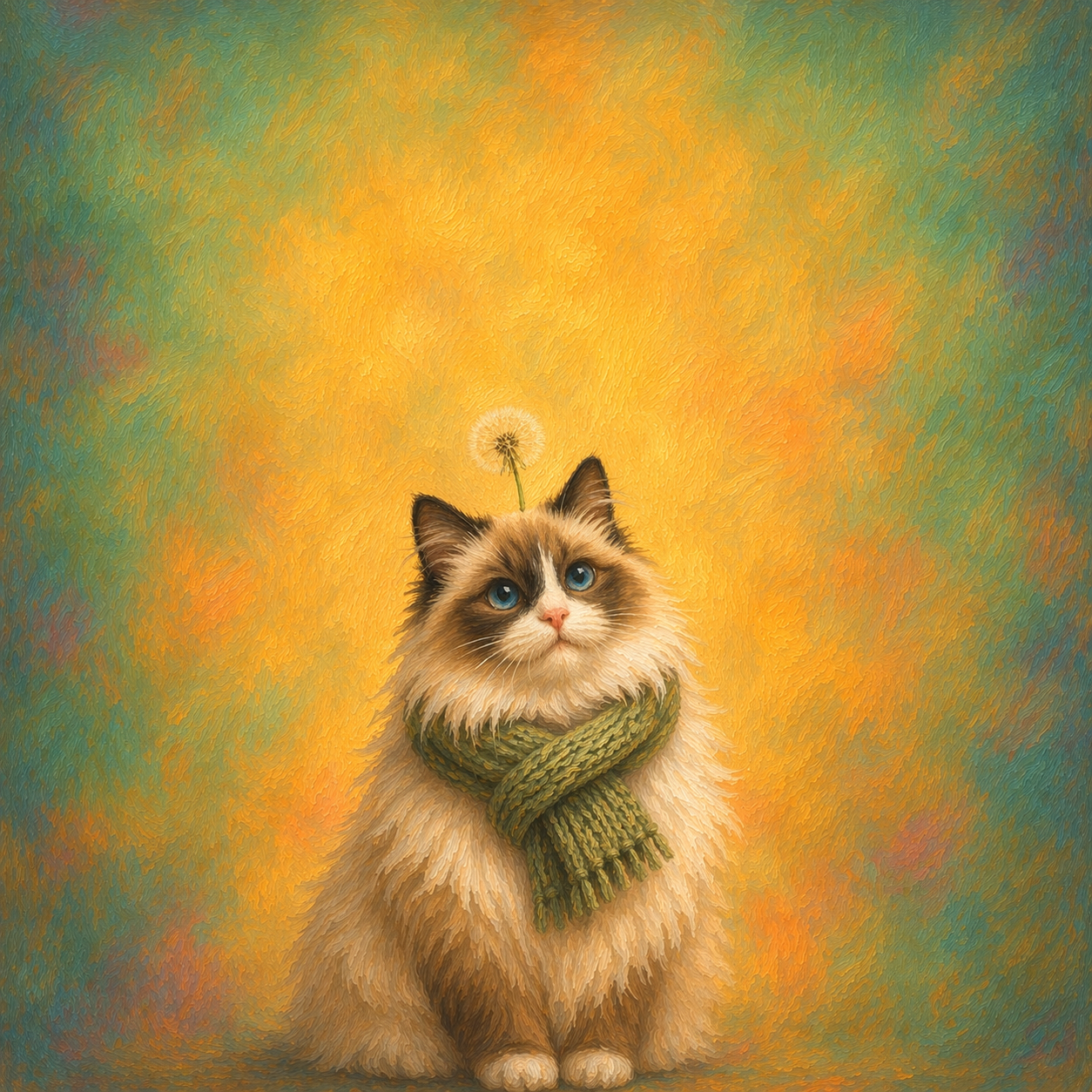
Here’s our first set of cats. Meet them — from left to right:
Conclusion
If you find “your” one among them — then it was all worth it. This was the AdiGuide team. We’ll hear each other again!